Textile Craftsmanship · Clothing and Accessories
From Fine Fiber to Homewear: Understanding Luxury Loungewear
Cashmere loungewear is often described in the language of softness. Yet its appeal rests on more than a sensuous first touch: fiber quality, yarn, knit structure, garment shaping and care all contribute to the way a piece feels, wears and endures. Understanding those details makes it easier to see past the label and appreciate the craft behind an exceptionally comfortable layer.
The character of cashmere
Cashmere is a fine animal fiber obtained from the soft undercoat of cashmere-producing goats. The down grows beneath coarser outer hair, helping the animal adapt to cold conditions. When separated and processed, those delicate fibers can be spun into yarn with a distinctive combination of softness, insulation and lightness. That combination is why cashmere has a natural place in clothing designed for rest: a cardigan, relaxed trouser or wrap can feel warm without the weight of a heavy layer.
The word “cashmere” signals a fiber category, not a single, uniform quality. Fibers vary, and the finished garment depends on choices made throughout production: how the down is collected and sorted, how it is cleaned and prepared, how fine or sturdy the yarn is spun, and how that yarn is knitted or woven. Two garments carrying the same fiber description may therefore differ markedly in softness, resilience, surface appearance and useful life.
Cashmere’s warmth is often understood as a practical pleasure rather than a dramatic one. A fine knit can sit close to the body while holding a comfortable pocket of warmth; a looser construction may feel airier and move fluidly. The best choice depends on the garment’s role and the wearer’s preferences. A robe intended for a cool morning has different demands from a lightweight cardigan meant to be layered through changing indoor temperatures.
Why fiber fineness is only part of the story
Fiber fineness influences the hand of a fabric, but it should not be treated as a complete measure of quality. A finer fiber may feel especially gentle against skin; a well-made garment still needs sound yarn construction and thoughtful finishing. If yarn is poorly balanced, or if the knit is too loose for its intended use, the garment may lose shape or develop surface wear sooner than expected. Luxury is not simply a number on a specification sheet. It is the coherence of material, construction and design.
Length and consistency also matter. Longer fibers can help create yarns with greater cohesion, while shorter fibers may be more prone to escape from the fabric surface. This does not mean every soft garment is destined to pill, or that any pilling proves poor quality. Pilling is a normal consequence of friction: loose fiber ends tangle into small balls, often at areas such as underarms, cuffs and sides. The amount and timing vary with the fiber, yarn, knit and frequency of wear.
For shoppers, the practical lesson is to look beyond claims such as “ultra-soft” or “pure luxury.” Ask what the garment is made from, whether it is a blend, and whether the maker provides clear care guidance. If a label specifies a blend, that is useful information rather than a flaw. Other fibers may change a fabric’s strength, texture, drape or price. The relevant question is whether the composition and construction suit the garment’s purpose.
Reading the label with a discerning eye
Fiber-content labeling is the starting point for understanding a garment. It tells you what materials are present, but not everything about their proportion, origin or performance unless those details are also disclosed. A clear label names the fiber and gives the percentage in a blend. Care instructions offer another kind of evidence: they indicate how the finished textile is expected to be maintained, though they do not by themselves establish quality.
Marketing language can be evocative but imprecise. “Cashmere feel,” “cashmere touch” and similar phrases may describe a soft hand rather than a garment made from cashmere. Read the composition statement before relying on the product name or headline description. Where transparency matters to you, look for information about the supply chain, processing and manufacturing location, while remembering that a stated country of manufacture does not necessarily identify where the raw fiber originated.
Useful questions include:
- Does the fiber-content label state the exact materials and percentages?
- Is the garment knitted or woven, and does the construction fit the way it will be worn?
- Are seams, cuffs, hems and closures finished neatly and securely?
- Are care instructions specific, accessible and realistic for your routine?
- Does the maker explain sourcing or production claims clearly, without relying on vague assurances?
These questions help separate a considered purchase from an impulse prompted by a luxurious description. They also apply across the wider Clothing and Accessories category, where the feel of a fiber is only one part of a garment’s value.
Knit, drape and the architecture of ease
In loungewear, construction determines how softness behaves. A jersey knit may offer a clean, flexible surface and easy movement. Ribbing can add stretch and help cuffs or waistbands sit comfortably. A denser knit may feel more substantial and retain warmth, while a more open structure can create a lighter drape. These are not merely decorative distinctions: they shape the garment’s relationship with the body.
Fit matters just as much. A relaxed silhouette should allow movement without becoming shapeless; a close-fitting layer should not pull at the shoulders, elbows or seat. When assessing a cardigan or lounge top, consider the balance between shoulder width, sleeve length and body ease. For trousers, examine the rise, waistband construction and leg shape. Even a beautiful yarn can feel restrictive if the pattern and proportions do not support the intended use.
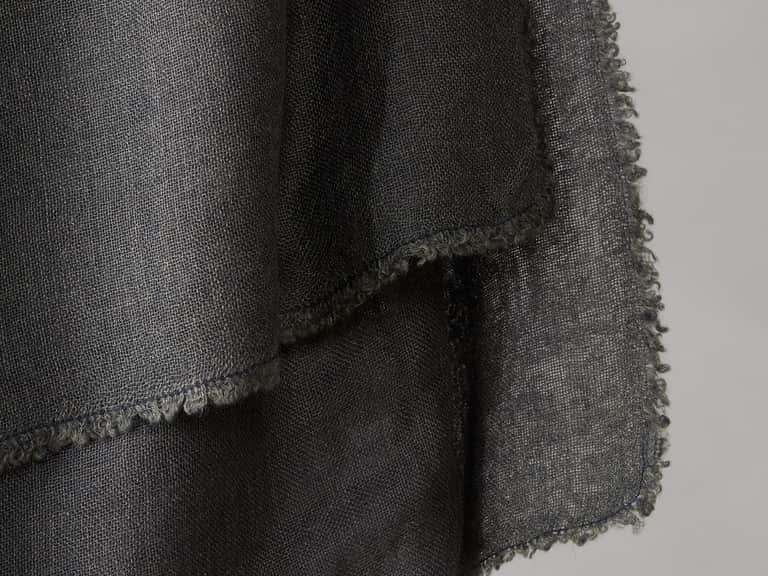
Finishing is where a garment’s quiet craft becomes visible. Look at whether seams lie flat, whether edges are stable and whether buttons or other fastenings are securely attached. Check that cuffs and hems feel comfortable rather than tight. Good finishing does not need to call attention to itself. Its purpose is to make the garment feel composed, functional and pleasant over repeated wear.
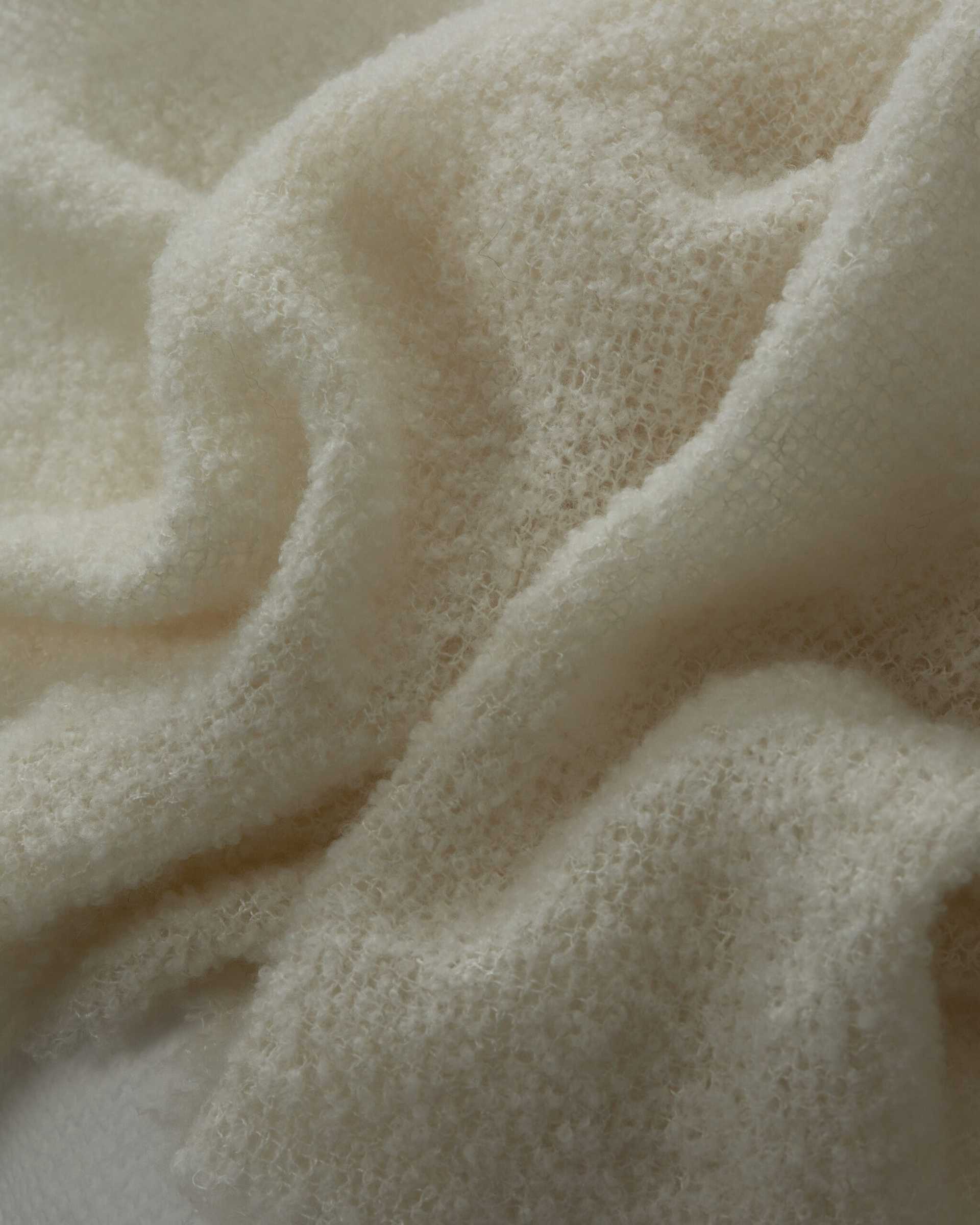
Some surface fuzz is characteristic of soft natural-fiber knits, especially when new. That appearance should be understood in context: a brushed, lofty finish is different from loose fibers shedding excessively or a garment already showing pronounced thinning. A brief, careful inspection in natural light can reveal whether the knit looks even and whether the seams and edges are finished consistently.
A wardrobe for indoor life
Luxury loungewear is most successful when it is designed for real routines. The category can include knit tops, cardigans, trousers, robes and soft accessories, each with a different relationship to warmth and movement. A lightweight layer may be useful across seasons; a heavier set may come into its own on cold evenings. Instead of treating “loungewear” as a single uniform, think in layers that can be adjusted as the day changes.
Colour and silhouette have their own practical elegance. Neutral shades may make separates easier to combine, while a saturated tone can lend a familiar garment a more expressive character. A cardigan worn over a simple base layer can move from a quiet morning to an informal gathering without requiring a change of mood. The point is not to turn every home garment into an occasion piece, but to choose forms that feel intentional and comfortable in equal measure.
Softness should not be confused with fragility. A well-designed garment can be both delicate to the touch and suitable for regular wear, provided its construction and care are appropriate. Rotating knitwear gives fibers time to recover between wears. Wearing a smooth layer beneath a cashmere knit can reduce friction, and avoiding rough surfaces or sharp accessories can help protect the fabric. Small habits often matter more than elaborate routines.
Caring for cashmere without overcomplicating it
Care begins with the instructions supplied for the specific garment. Cashmere pieces may have different finishes, linings, seams or blends, so a universal washing rule is not reliable. Some are intended for professional cleaning; others may be suitable for gentle hand washing or a carefully selected machine cycle. Follow the garment’s label, and when instructions are uncertain, seek guidance from the maker or a reputable textile-care professional.
Between wears, airing a garment can often help it feel fresh without unnecessary washing. When washing is appropriate, handle the knit gently and avoid wringing or twisting, which can distort its shape. Support the garment as it is lifted from water, press out excess moisture carefully, then reshape it and dry it flat if the care guidance permits. Hanging a wet knit can stretch it under its own weight.
Storage deserves equal attention. Clean garments before putting them away for a long period, since body oils and food traces can attract pests. Fold knitwear rather than hanging it, which may pull the shoulders out of shape. Store it in a clean, dry place, and consider breathable storage materials. Strong scents or harsh treatments are not a substitute for cleanliness and may not be suitable for every fiber or household.
Pilling can usually be managed with patience. If the care label and garment construction allow it, use a fabric comb or another tool designed for knitwear, moving lightly over the surface and avoiding pressure. Do not pull pills off by hand: doing so can draw fibers from the fabric and create more damage. A garment with a little surface pilling may still be sound; thinning, holes or loose seams call for repair rather than cosmetic treatment alone.
Considering sourcing and durability
Cashmere is an animal fiber, so thoughtful assessment includes questions beyond softness. Responsible sourcing involves attention to animal welfare, land management, the people involved in processing and production, and the environmental effects of the supply chain. These issues are complex, and broad claims should be read carefully. A specific explanation of a standard, traceability program or production practice is more informative than a generic promise of responsibility.
Durability also has a human and environmental dimension. A garment worn often, cared for appropriately and repaired when needed may offer greater long-term value than a piece bought for a label alone. Consider whether the style will work with what you already own, whether the construction suits your routine and whether you are prepared to follow its care requirements. Cost per wear is not a precise measure of quality, but it can encourage a more considered relationship with clothing.
Blends can be part of this conversation. A mix of fibers may be chosen to alter performance, appearance or price; its merits depend on the actual materials and how they are used. Read the full composition, and avoid assuming that a higher cashmere percentage automatically means a better garment. The right textile is the one whose characteristics align with its purpose and whose origin and care expectations are clear.
The pleasure of knowing what you wear
There is a particular intimacy to clothing made for home: it accompanies unhurried hours, changing temperatures and the small rituals that give a day its shape. Cashmere loungewear brings the material’s fine hand and insulating warmth into that private setting. But the most persuasive luxury is not a claim of extravagance. It is the ease of a well-balanced knit, the comfort of a considered fit and the confidence that comes from understanding how the piece was made.
Approach a garment as both sensation and structure. Notice how the fiber feels, then examine the label. Consider the yarn and knit, the quality of the finishing, the intended silhouette and the care it will require. This kind of attention does not diminish the pleasure of dressing. It sharpens it, allowing the softness of cashmere to be appreciated as the result of material knowledge and textile craftsmanship—not simply as a word on a tag.
Ultimately, the finest loungewear earns its place through use. It should feel inviting without being precious, warm without being cumbersome, and beautiful without sacrificing ease. When fiber, construction and purpose meet in balance, a simple layer becomes a lasting part of the wardrobe: quiet, tactile and made for the art of being at home.