Textile heritage · Material culture · The art of rest
Kashmir’s Fine-Fiber Legacy in Luxury Bedding
The story of fine fibers in Kashmir is one of close attention: to the mountain environment, the qualities of a fleece, and the patient work that turns delicate strands into cloth. Following that story into contemporary bedding reveals how softness, warmth and drape are shaped by both material and making—and why cultural heritage should never be mistaken for a product’s provenance.
Published October 12, 2026
A textile tradition, not a shorthand
“Cashmere” can summon an immediate impression: a fine, soft fiber, a particular kind of warmth, and an association with luxury. Yet the word carries more than a tactile promise. It points toward a complex history of fiber knowledge, textile production and exchange connected to Kashmir and the wider Himalayan region. To understand that history is to look beyond the finished cloth, toward the landscapes and skilled labor behind it.
Kashmir’s textile heritage is often discussed through shawls, especially the celebrated woven shawls that circulated far beyond the region. Their reputation grew from a combination of fine material, intricate workmanship and the visual sophistication of designs that could be both elaborate and remarkably light. The shawl is not bedding, of course, but its history offers a compelling lens through which to consider what fine fibers can do: hold warmth without excessive weight, take on intricate pattern, and move with a fluidity that makes cloth feel almost alive.
That connection is one of material sensibility rather than a simple, unbroken line from a historic shawl loom to a contemporary blanket. Modern bedding has its own manufacturing contexts, standards, supply chains and design aims. A throw made today may draw on the qualities people admire in cashmere—softness, insulation and graceful drape—without being made in Kashmir, using Kashmiri techniques, or sharing the history of a regional textile tradition. Keeping those distinctions visible makes the story richer, not less relevant.
The landscape behind a fine fiber
The name cashmere is associated with Kashmir, while the fiber used in cashmere textiles comes from the soft undercoat of certain goats. In the cold environments where these animals are raised, that undercoat provides insulation. It is the fine fibers collected from this layer—not the coarser outer hair—that are prized for their softness and warmth. The exact characteristics of a finished yarn depend on the fiber itself, as well as how it is sorted, prepared, spun and woven or knitted.
“Pashmina” is also used in discussions of the region’s fine-fiber heritage, though its meaning can vary by context, market and tradition. It is often associated with especially fine fiber and with the making of prized shawls. The terms cashmere and pashmina should not be treated as automatic guarantees of a particular origin, quality, technique or level of handwork. Labels and marketing language alone do not tell the whole story; careful descriptions of fiber composition and production are essential.
In a traditional textile economy, material knowledge is distributed across many kinds of work. Fiber must be gathered and prepared; yarn must be spun; cloth must be constructed; and, depending on the textile, surfaces may be patterned, embroidered, finished or assembled. Each stage asks for decisions about consistency, tension, strength and feel. A textile’s reputation may rest on its apparent delicacy, but its success also depends on technical control: fine yarn still has to withstand the stresses of making and use.
Recognizing this broader chain of knowledge guards against the romantic idea that a region’s textile identity can be reduced to a single material or a single object. Kashmir’s significance lies not only in what is made, but in the historical relationships among fiber, craft, commerce, design and place. The details have changed across time, and the traditions themselves are neither static nor separate from the wider world.
From the shawl to the bed
Luxury bedding translates the attraction of fine fiber into a domestic setting. A blanket or throw is encountered differently from a shawl: it may rest across a bed, fold over a chair, or be drawn around the shoulders on a cool evening. Scale, weight and construction shape how it performs. A close, plain weave can create a smooth, composed surface; a looser structure may feel airy and show more movement; a knit can emphasize stretch and texture. Fiber matters, but it is only one part of the experience.
Cashmere is valued in bedding for its ability to offer warmth with a comparatively light feel. That characteristic can make a fine-fiber throw appealing as a top layer rather than a heavy cover. Its drape also matters aesthetically. A textile that falls softly over the corner of a bed creates a different impression from one with a crisp, weighty edge. The difference is not simply “better” or “worse”; it is a question of intended use, construction and personal preference.
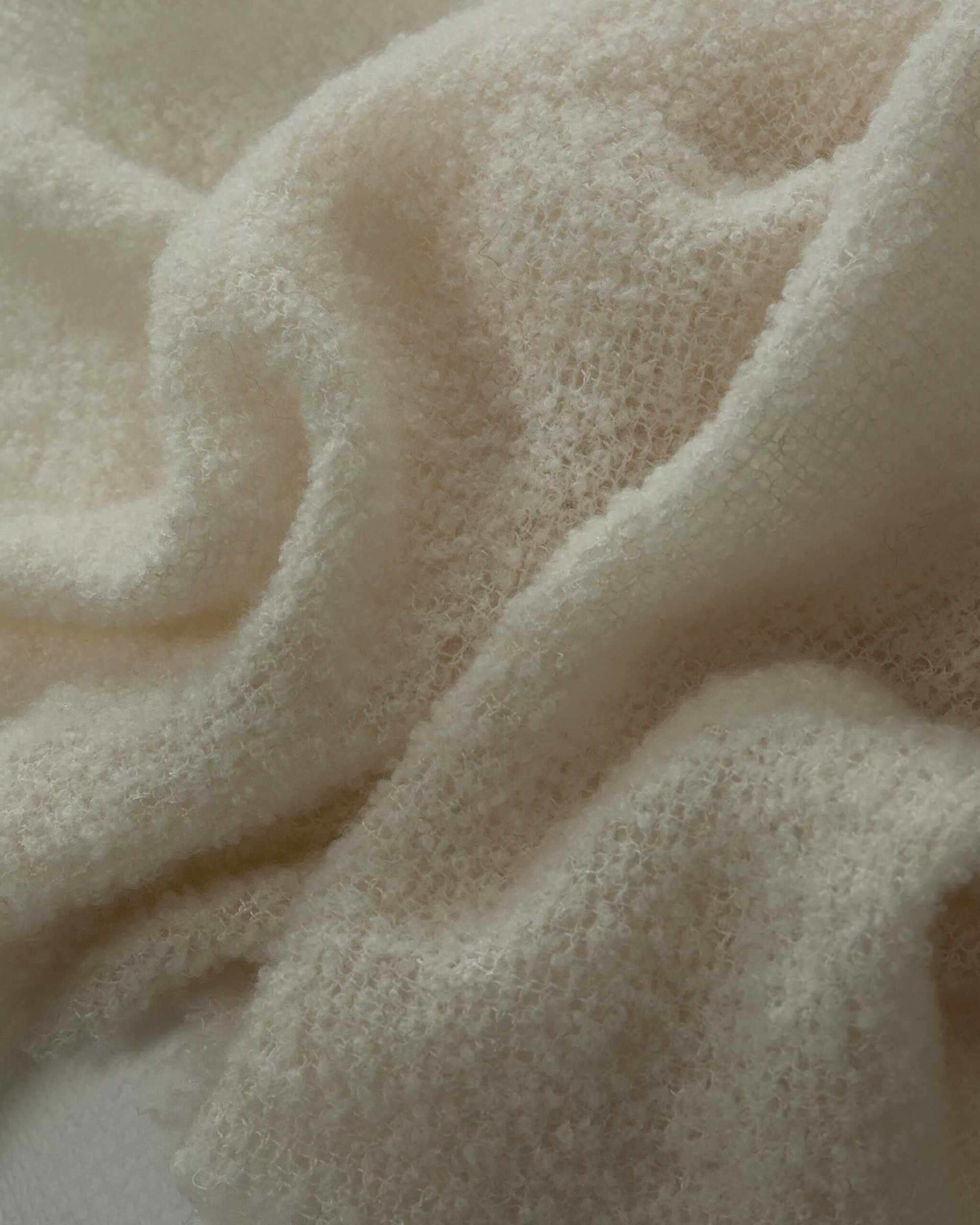
Blends introduce another dimension. Cashmere paired with silk, for example, combines two fibers with distinct qualities and produces a different hand and visual effect from a textile made of cashmere alone. A cashmere-and-silk gauze throw such as the Mir Throw illustrates how a light, layered textile can sit between blanket and accent piece. Its stated composition is 80 percent cashmere and 20 percent silk, and its fine weight is intended for versatile layering on a bed or sofa. Those specifications describe this particular contemporary product; they do not establish a connection to Kashmir’s historical production or indicate where its fibers were raised or its cloth was made.
That distinction is central to an informed approach to luxury bedding. A textile may share a fiber category with historic regional crafts while belonging to a very different story of design and manufacture. Contemporary makers work across international supply chains, and product origins can differ at the levels of raw material, yarn, weaving and finishing. When those details are provided, they offer a more useful account than a broad appeal to heritage alone.
Reading softness, warmth and drape
Softness is the quality most often invoked in descriptions of cashmere, but it is not a complete measure of textile performance. Fiber fineness, yarn construction, fabric density and finishing all affect how a blanket feels against the skin. A delicate hand can be inviting, while a more substantial structure may feel reassuring and durable. Even two textiles with similar stated fiber content can differ markedly in texture and behavior.
Warmth is similarly nuanced. A fine textile can insulate without feeling bulky, but the warmth of bedding depends on more than fiber. Construction, fabric weight, the number of layers, room temperature and the user’s own comfort all play a role. A lightweight throw can be useful as a flexible layer through changing seasons, while a heavier blanket may be better suited to colder conditions or to someone who prefers a more enveloping feel.
Drape is the way cloth hangs and moves. It depends on the relationship between yarn, weave or knit, weight and finishing. Fine fibers can contribute to a supple fall, but a particular textile’s structure remains decisive. On a bed, good drape can soften the geometry of sheets and coverlets; in a living space, it can give a throw an effortless, lived-in quality. Those effects are part of why a blanket may be chosen as much for its presence in a room as for its warmth.
When comparing textiles, it helps to ask practical questions as well as sensory ones: Is the piece intended for everyday use or occasional layering? Does its care method suit the household? Is the composition clearly stated? Are dimensions and weight available? A beautiful description cannot substitute for these specifics. The most satisfying choice is often the one whose material, construction and care requirements align with how it will actually be used.
Heritage and the language of origin
As interest in traditional crafts grows, heritage language has become a powerful part of how textiles are presented. It can open a door to cultural learning, but it can also blur distinctions when terms such as “Kashmir,” “cashmere” and “pashmina” are used as if they were interchangeable. One can refer to a place, another to a fiber category, and another to a term associated with a particular textile history. Their meanings overlap in popular usage, but they do not answer the same questions.
A textile described as cashmere does not, by that fact alone, reveal where the fiber originated, where it was spun, or where the finished cloth was woven. Nor does the presence of a fine fiber make a contemporary blanket a traditional Kashmiri textile. Responsible descriptions separate material composition from geographic provenance and craft lineage. They identify what is known, avoid suggesting what is not documented, and make room for the people and processes that a product label may not capture.
This care with language matters because cultural traditions belong to living communities, not merely to the vocabulary of luxury. When regional craft is used as atmosphere without attention to its history, the result can turn a specific body of knowledge into a decorative mood. A more respectful approach treats heritage as something to study: through reliable historical sources, museum collections, textile research and accounts that acknowledge the limits of what is known.
It also recognizes that tradition is not frozen in a past era. Artisans, producers and communities adapt practices to changing materials, markets and circumstances. A cultural history should therefore resist tidy narratives in which a craft appears untouched by time. The relationship between historical textile making and contemporary production is often layered, interrupted and evolving—a story that rewards careful attention rather than easy claims of continuity.
A more considered way to choose bedding
For someone drawn to cashmere bedding, the first step is to look beyond the name and read the product details closely. Fiber percentages clarify whether a piece is pure cashmere or a blend. Weave or knit descriptions help explain its structure, while dimensions and weight give clues about its intended scale and use. Where provided, information about sourcing, production location and certification can add context. These details should be read precisely: a certification may address a particular part of a supply chain, not every question a buyer might have.
Care is another measure of suitability. Some fine-fiber textiles require specialist cleaning, while others may have different instructions depending on their construction and blend. Following the care label helps preserve the surface and shape of the fabric. Gentle handling, appropriate storage and protection from prolonged friction can also support a longer useful life. These are not glamorous details, but they are part of the relationship between a household and a textile.
It is worth thinking about a blanket as a lasting object rather than a fleeting trend. A restrained color, adaptable size and construction that suits regular use may prove more versatile than an elaborate design chosen only for a moment. Layering gives fine textiles a practical role: a throw can add warmth when needed, introduce texture without changing the whole bed, or move easily from bedroom to living room. The best luxury often feels quietly useful.
For research into Kashmir’s textile heritage, the same discernment applies. Distinguish primary historical evidence from later retellings; note whether a source describes a particular period, region or object; and be alert to differences between regional terminology and contemporary retail language. Museum catalogues and academic textile studies can provide important starting points, while specialist knowledge is valuable for interpreting technique and context. No single object can stand for an entire tradition.
The intimate scale of textile history
There is something unusually intimate about bedding as a way into material history. A blanket is not kept behind glass; it is folded, touched, drawn close and lived with. Its softness is not an abstract quality but a daily encounter between cloth and body. Seen in this light, the qualities that have long made fine fibers desirable—warmth, lightness and a graceful surface—are not merely luxuries. They are the result of material properties shaped by human decisions and textile skill.
Kashmir’s fine-fiber legacy offers a cultural frame for asking where those qualities come from and how they acquire meaning. It invites attention to the fiber’s origins, to the makers’ knowledge and to the routes by which textiles and ideas have traveled. At the same time, it asks us not to confuse inspiration with provenance. A modern cashmere throw can be admired for its feel and design on its own terms, while the region’s history deserves a clear, specific account.
The most thoughtful view holds both ideas together. Fine-fiber bedding can bring an exceptional tactile experience into contemporary life; Kashmir’s textile history can deepen our understanding of why such materials and techniques have mattered across generations. One is not a substitute for the other. When product details are transparent and cultural references are handled with care, the everyday blanket becomes an invitation to look more closely—not only at what the cloth feels like, but at the knowledge, labor and history woven into the wider story of textiles.